
The plate thickness of your silo and hopper, justified by the real material load
Knowing the real load on your silo or hopper plate, rather than inheriting it from the previous design, is the difference between sizing what is needed and oversizing to cover uncertainty. If a weld has failed or your customer requests a signed technical file, the calculation starts with the load.
Propose a part for a pilot case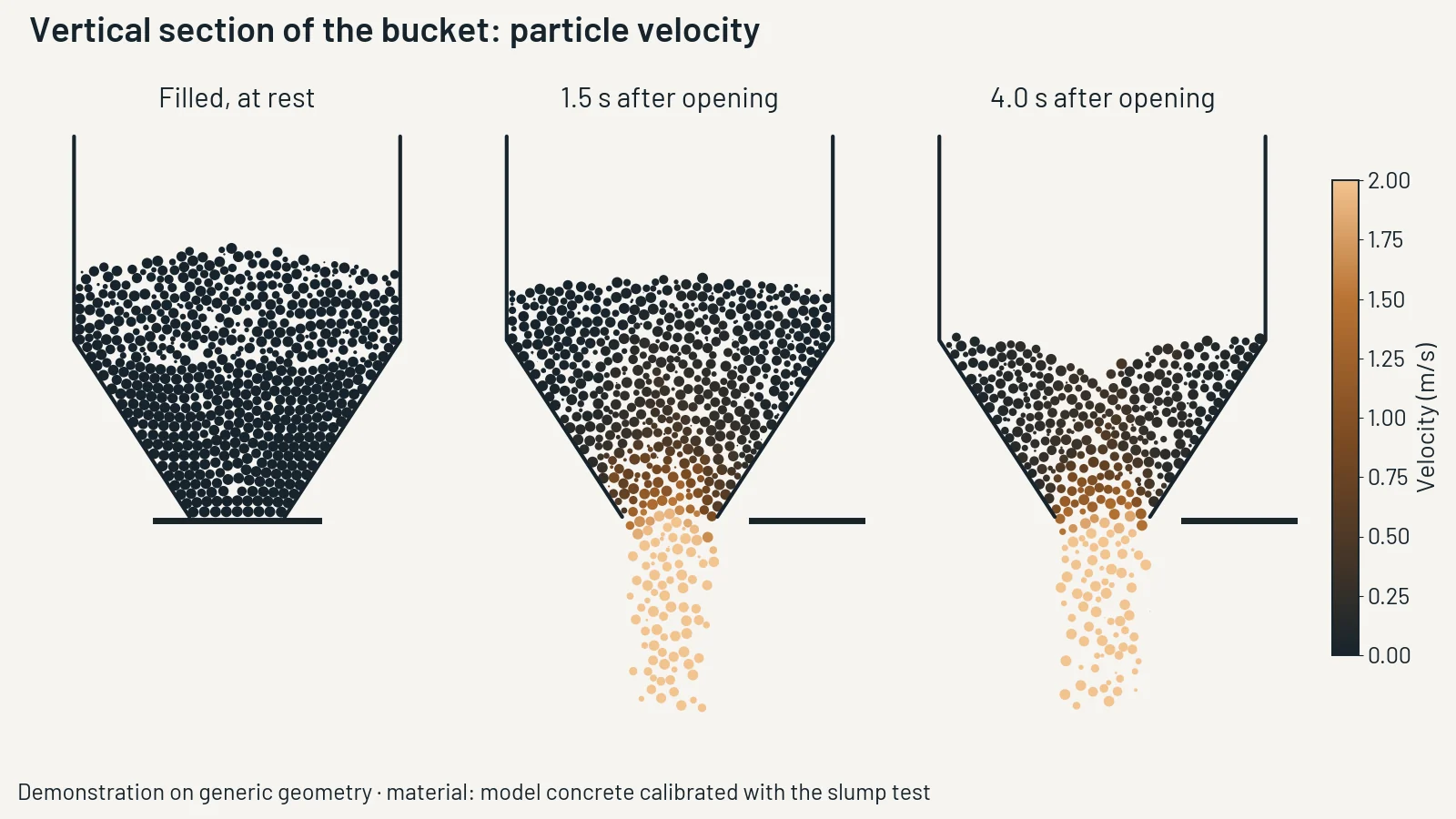
What we calculate
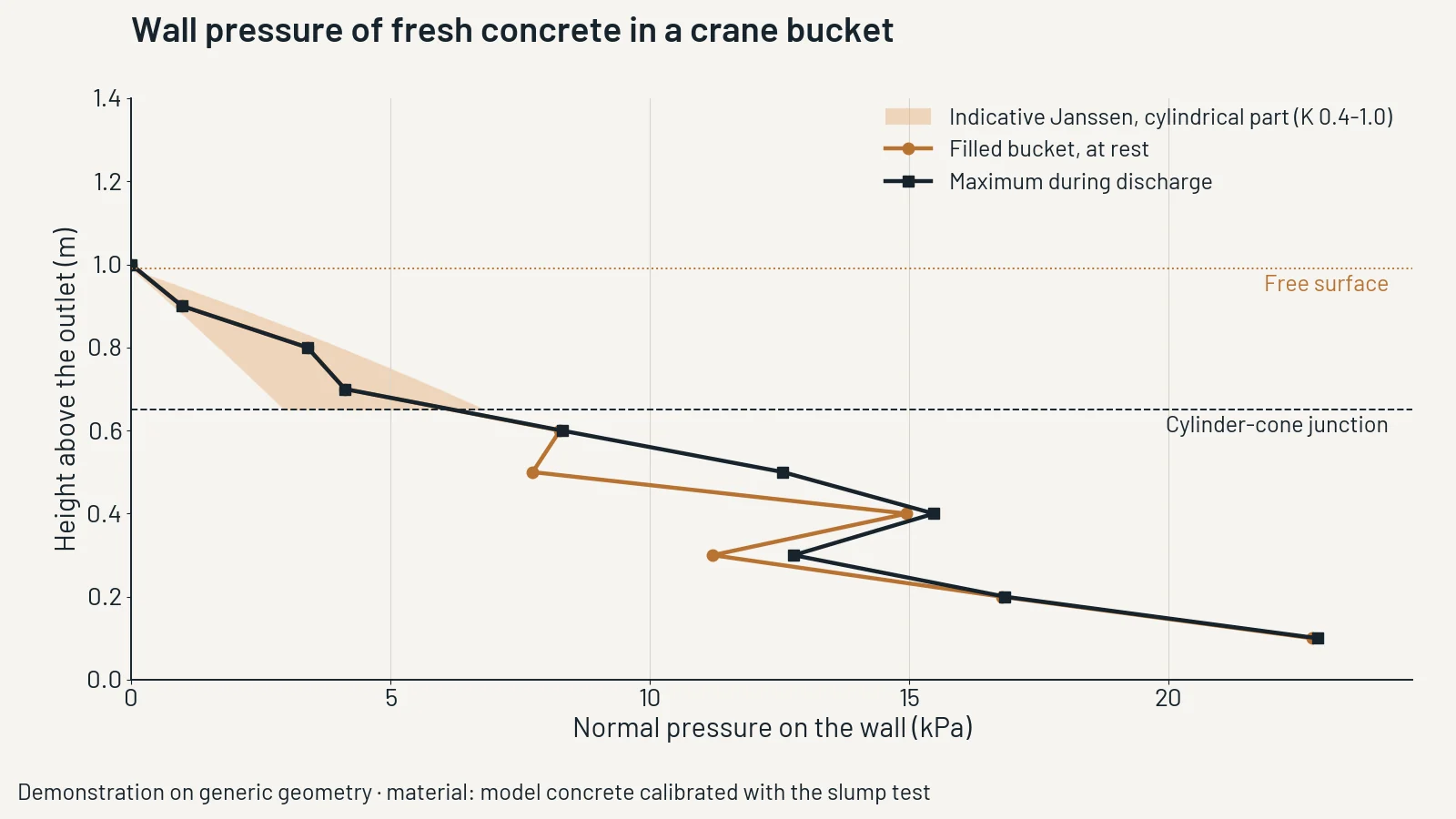
Material loads (EN 1991-4 and DEM)
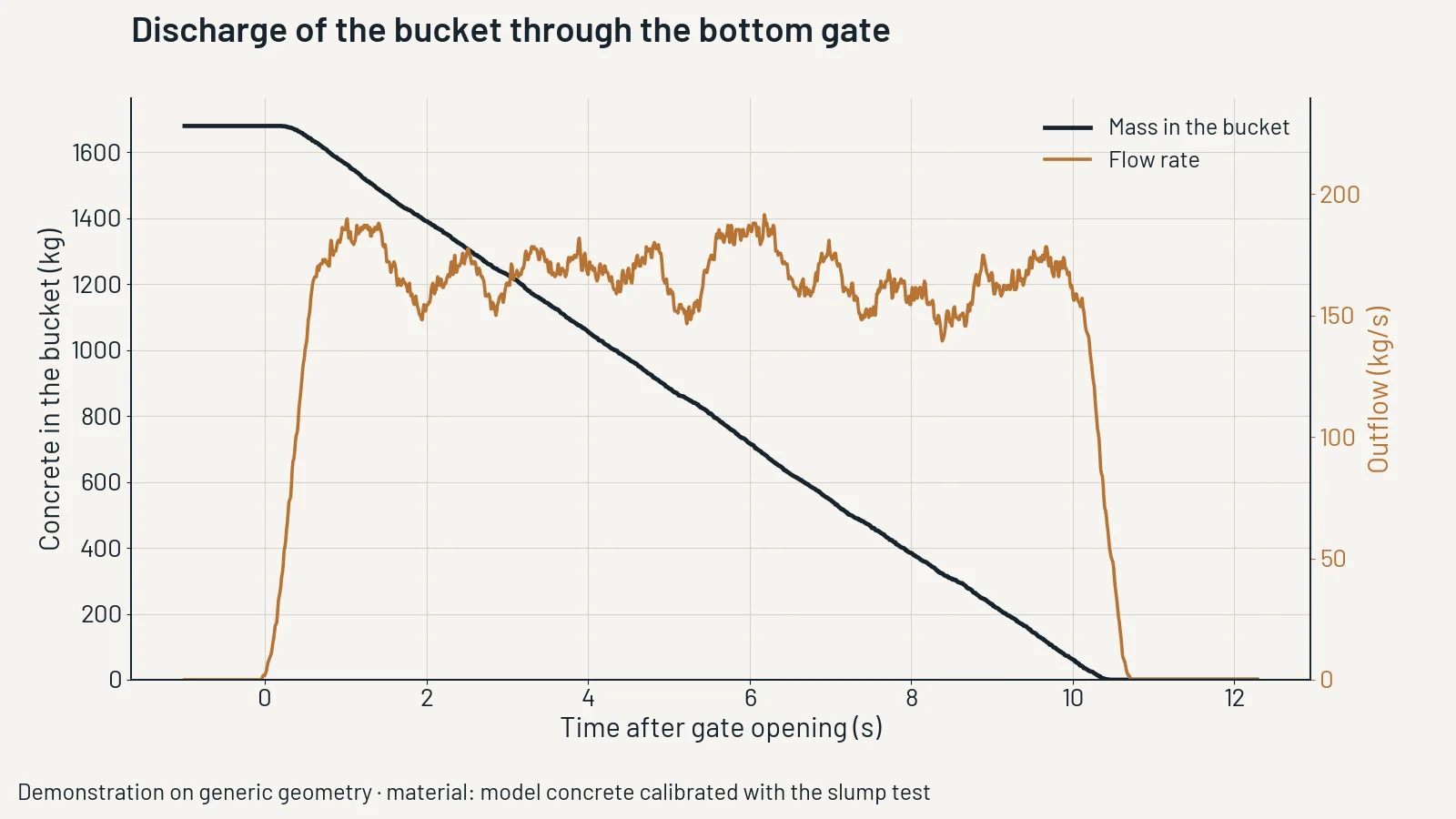
Material loads on wall, hopper and gate to EN 1991-4 and, where the flow requires it, with DEM using a material calibrated against a published test. The wheat silo DEM demonstration is still being calculated.
Stiffener and joint fatigue (FEM)
Stress and fatigue of stiffeners, ribs and joints to EN 1993-1-9 and IIW; fatigue life of the most loaded welds.
Outlet wear
Plate life at the discharge zone as a function of aggregate hardness and steel thickness.
Standards we work with
- EN 1991-4We calculate to: actions on silos and tanks (stored material pressure)
- EN 1993-1-9 . IIWWe calculate to: fatigue of welded joints (FAT curves, hot-spot method)
- EN 1090-1 / EN 1090-2We support your certification: CE marking of structural steel components
What is the difference between tables and DEM?
EN 1991-4 is the basis: it gives filling and discharge pressures, with patch loads and a procedure for eccentric discharge. DEM with a calibrated material is used to study what the standard simplifies, such as a specific hopper or outlet geometry, and to compare variants; it does not replace the standard. Our wheat silo demonstration against EN 1991-4 is being calculated. For each ensiloed material, DEM is calibrated with its own test.
Can I use my own FEM software and have you calculate only the load?
Yes. We can calculate only the load with DEM and deliver the force and pressure results for you to use in your own model. Or you can ask us for the complete analysis.
What data do you need for an existing silo?
Drawings in DXF or STEP, steel grade and thicknesses, the stored material (particle size, bulk density, angle of repose) and the usual fill and discharge cycle.
Does the Zytel report count for the CE marking technical file?
We calculate to EN 1991-4 and IIW. The report provides the calculation your technical file needs. Certification is issued by your certification body; we support your certification.
Propose a part for a pilot case
Send us the drawing or a description of the part, its material and how it works. We will tell you what we can calculate, with which data and in what time frame. The pilot case ends with a signed report.
Write to ingenieria@zytel.esPhone: 976 14 18 19