Skip to content
Calculation engineering and component redesign

Redesign your component with a company that has designed electric vehicles since 2007.

Zytel calculates your part before you build it, with finite elements, particle simulation and wear analysis, and delivers a technical report with the thickness, material and life of each variant.

Gorila EV, an electric car designed and built by Zytel, in three-quarter view.
Gorila EV, designed and built in-house by Zytel.
What we redesign

Components that work under load, fatigue, material flow or wear

We calculate the part you already make so that you can decide its next version with data: less weight, another material, another thickness or a new standard to meet.

  1. Frames, chassis and brackets

    Vehicles, trailers and agricultural and industrial machinery: stress and fatigue of the welded joints under the service load you declare.

  2. Tanks, housings and vessels

    Stress and fatigue of shells, bottoms and nozzles under filling and emptying cycles.

  3. Bulk-handling equipment

    Silos, hoppers, drums and dryers: how the material moves and what load it puts on walls and lifters.

  4. Wear parts

    Plates and liners: which wear-resistant steel and which thickness to choose, and how long each option lasts.

The examples on this page are in steel. If your component is made of another material, tell us which one and we will tell you whether we can calculate it and with what data.

Applications

Which parts we analyse

Each application is shown with a demonstration: a real calculation we ran on a generic part. The photographs show the type of part; the figures are our calculations.

01

Silos and hoppers

Pressure of grain, cement or aggregate on walls and hoppers during filling and discharge; fatigue of stiffeners and joints; wear at the outlet.

Engines
DEM . Finite elements . Wear
Standards
EN 1991-4 . EN 1993-1-9 . IIW
See analysis for Silos and hoppers
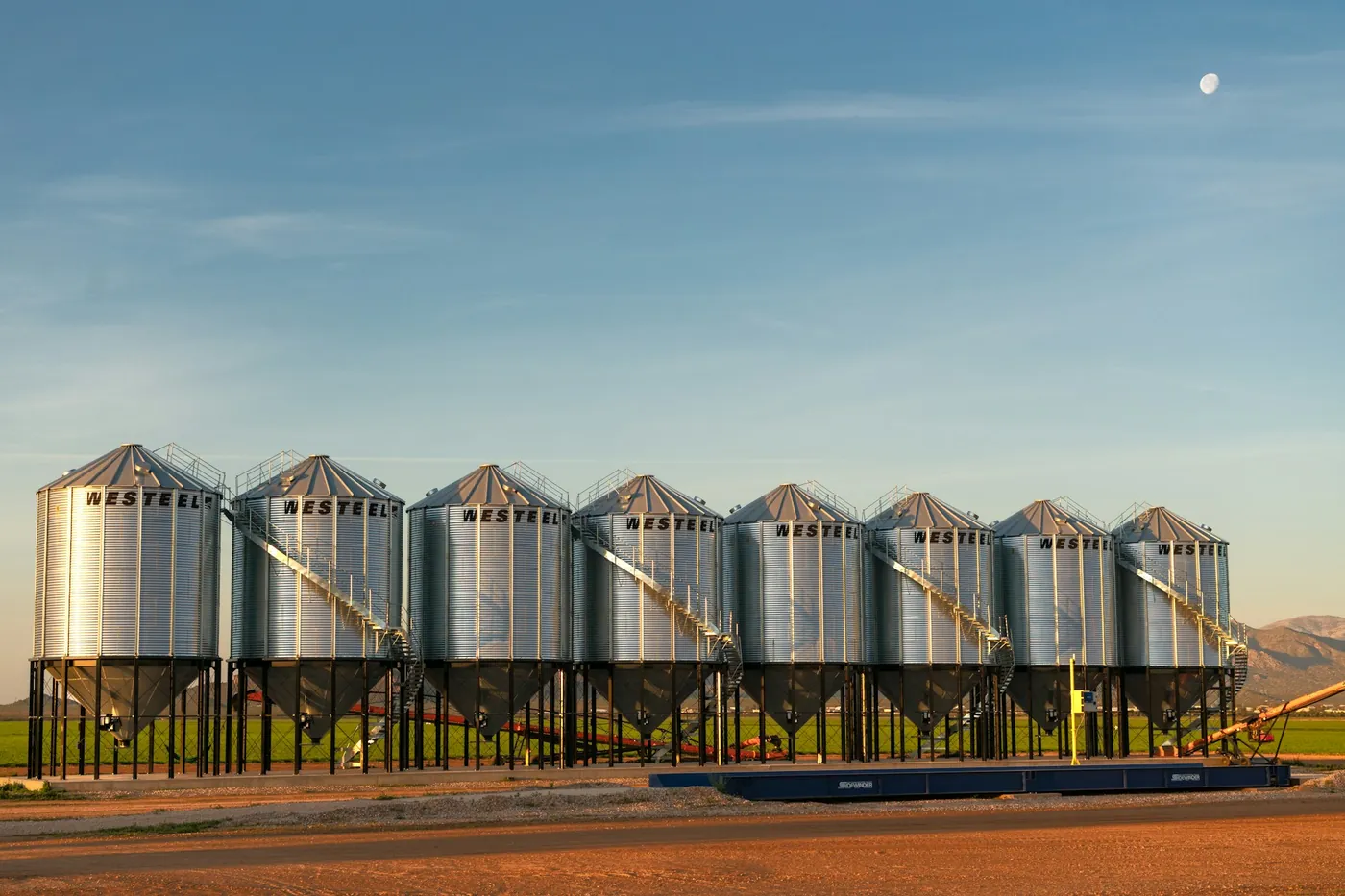
Row of steel grain silos with hoppers, at sunset.
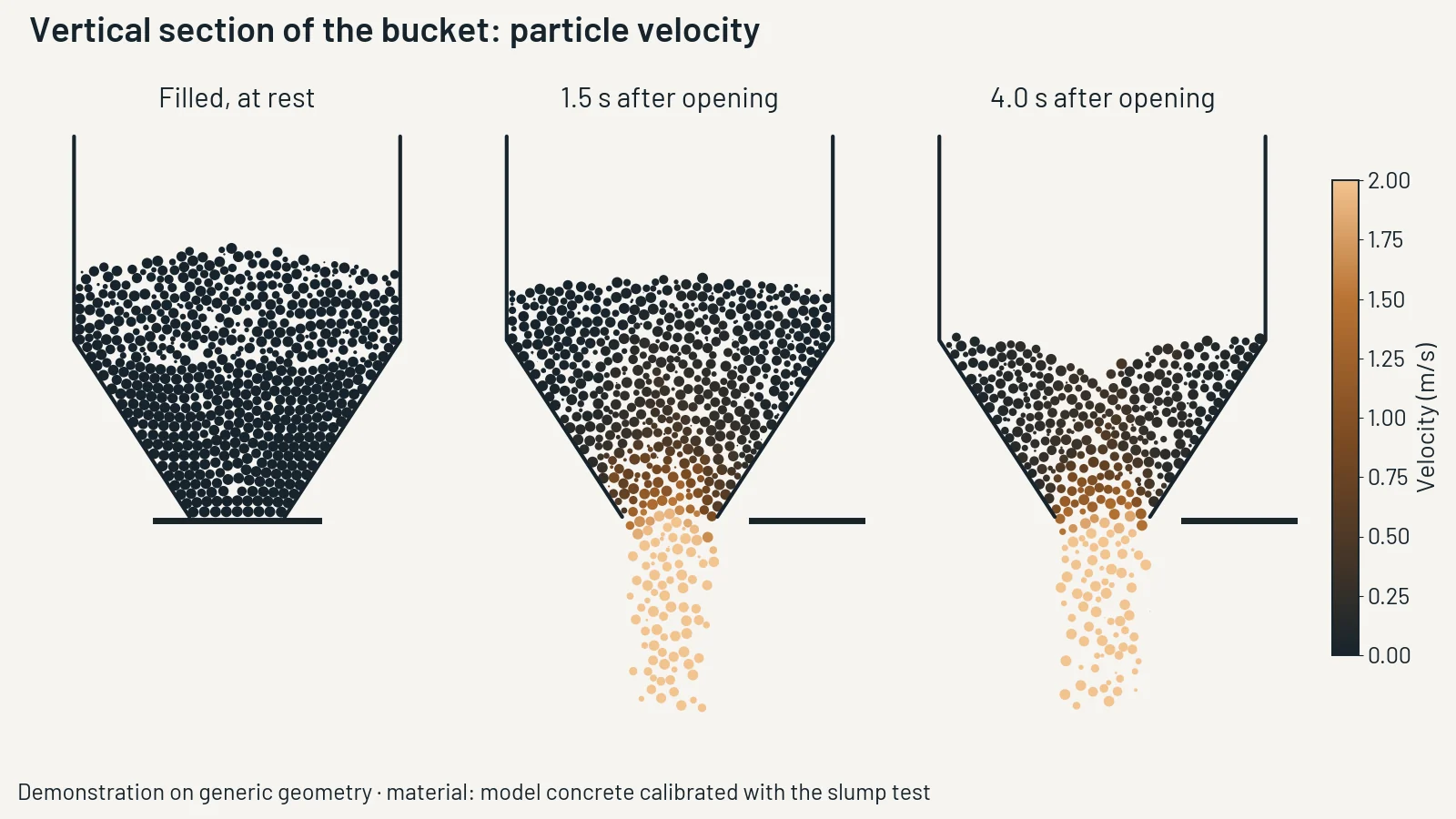
DEM demonstration on a generic fresh-concrete bucket: particle speed at rest and 1.5 s and 4.0 s after the gate opens. Material calibrated against the slump test.
02

Water and storage tanks

Shell-to-bottom joint and nozzles: stress and fatigue under fill and drain cycles.

Engines
Finite elements
Standards
EN 14015 . API 650 . EN 1993-1-9 . IIW
See analysis for Water and storage tanks
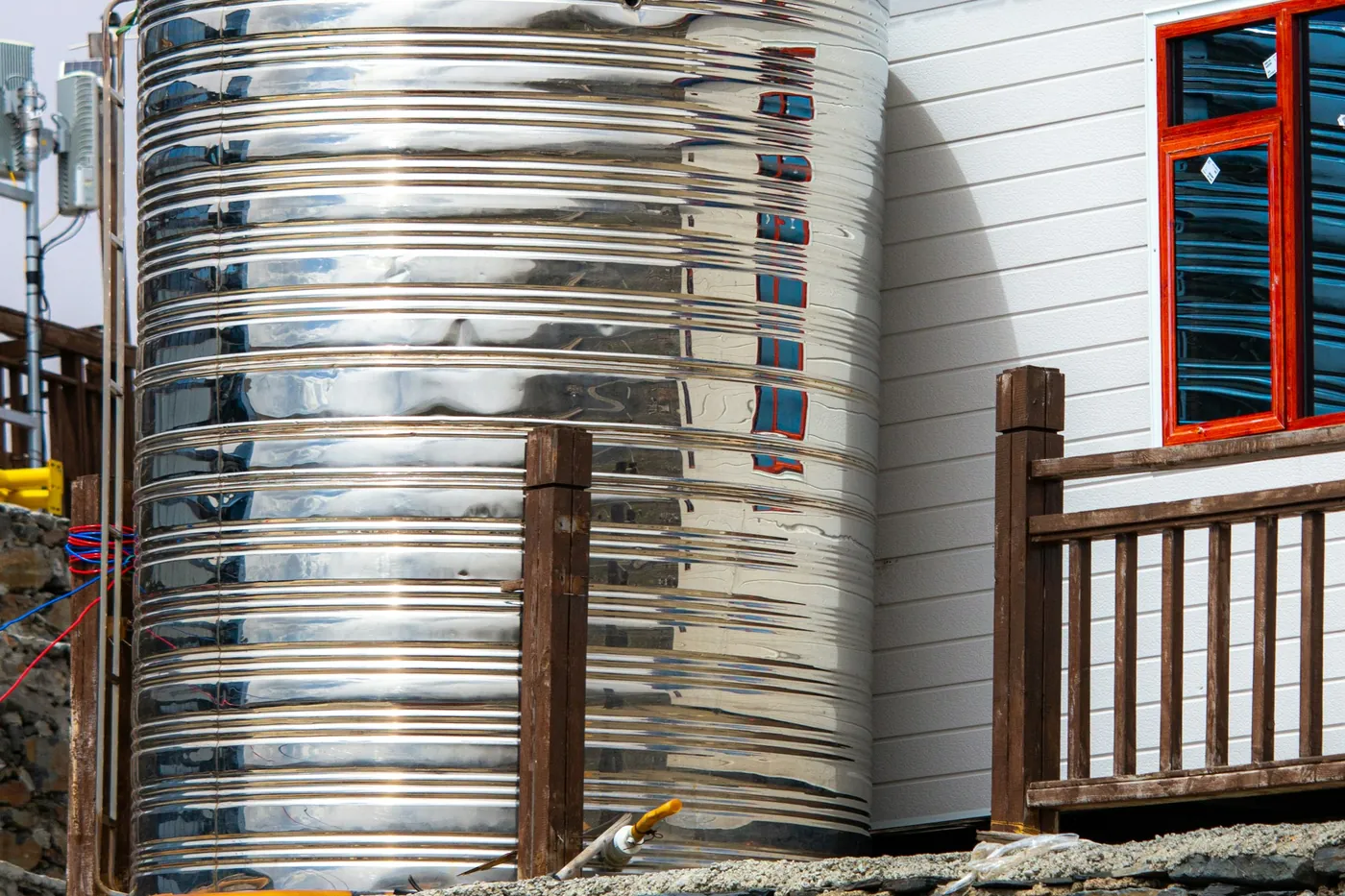
Stainless steel water tank next to a building.
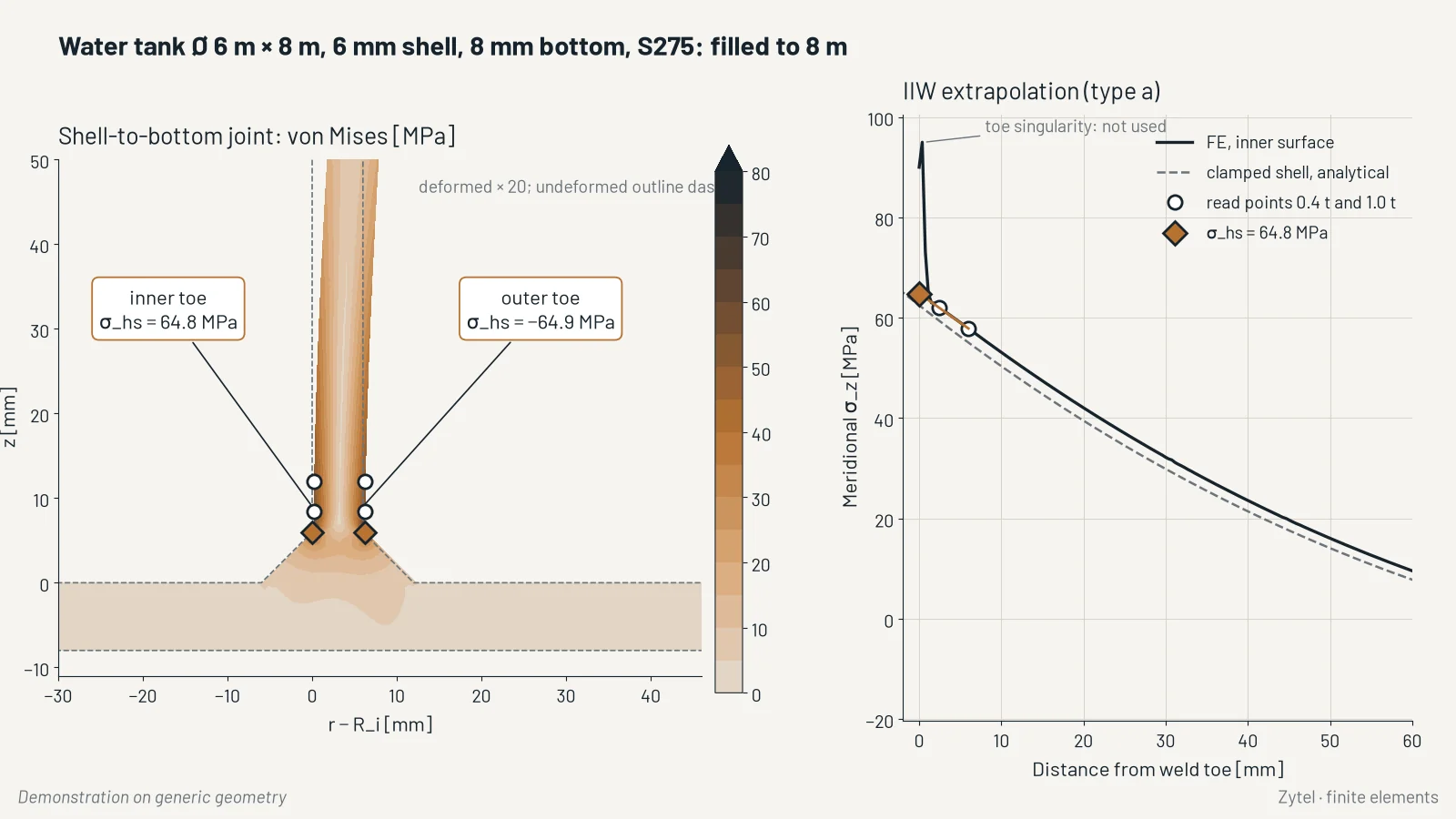
Demonstration on generic geometry: von Mises stress at the shell-to-bottom joint of a tank and hot-spot stress extrapolation to IIW.
03

Tippers, trailers and welded agricultural machinery

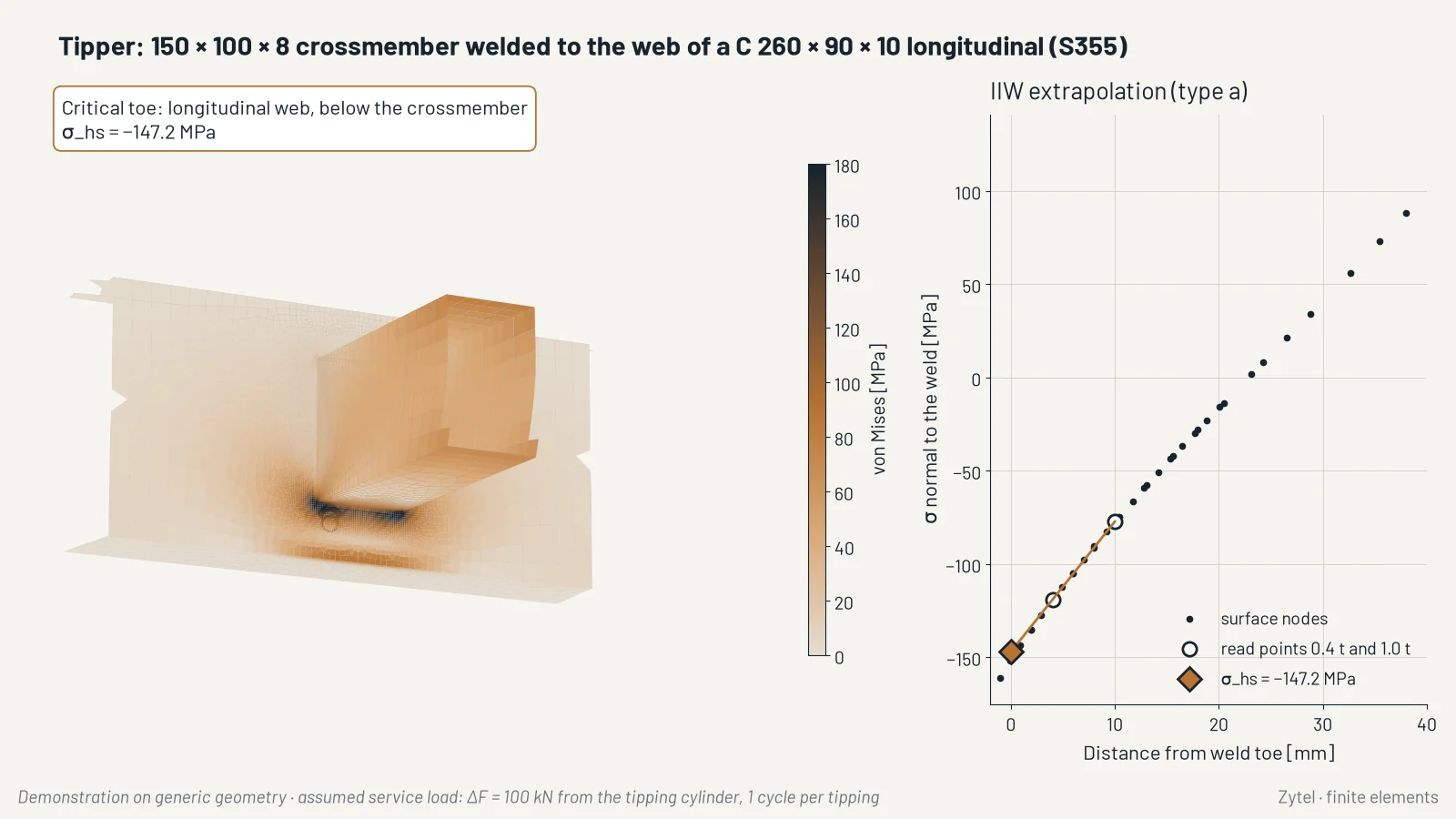
Chassis and bodies: fatigue of the welds on longitudinal members, cross-members and ribs under the service load you specify.

Engines
Finite elements . DEM
Standards
EN 1993-1-9 . IIW
See analysis for Tippers, trailers and welded agricultural machinery
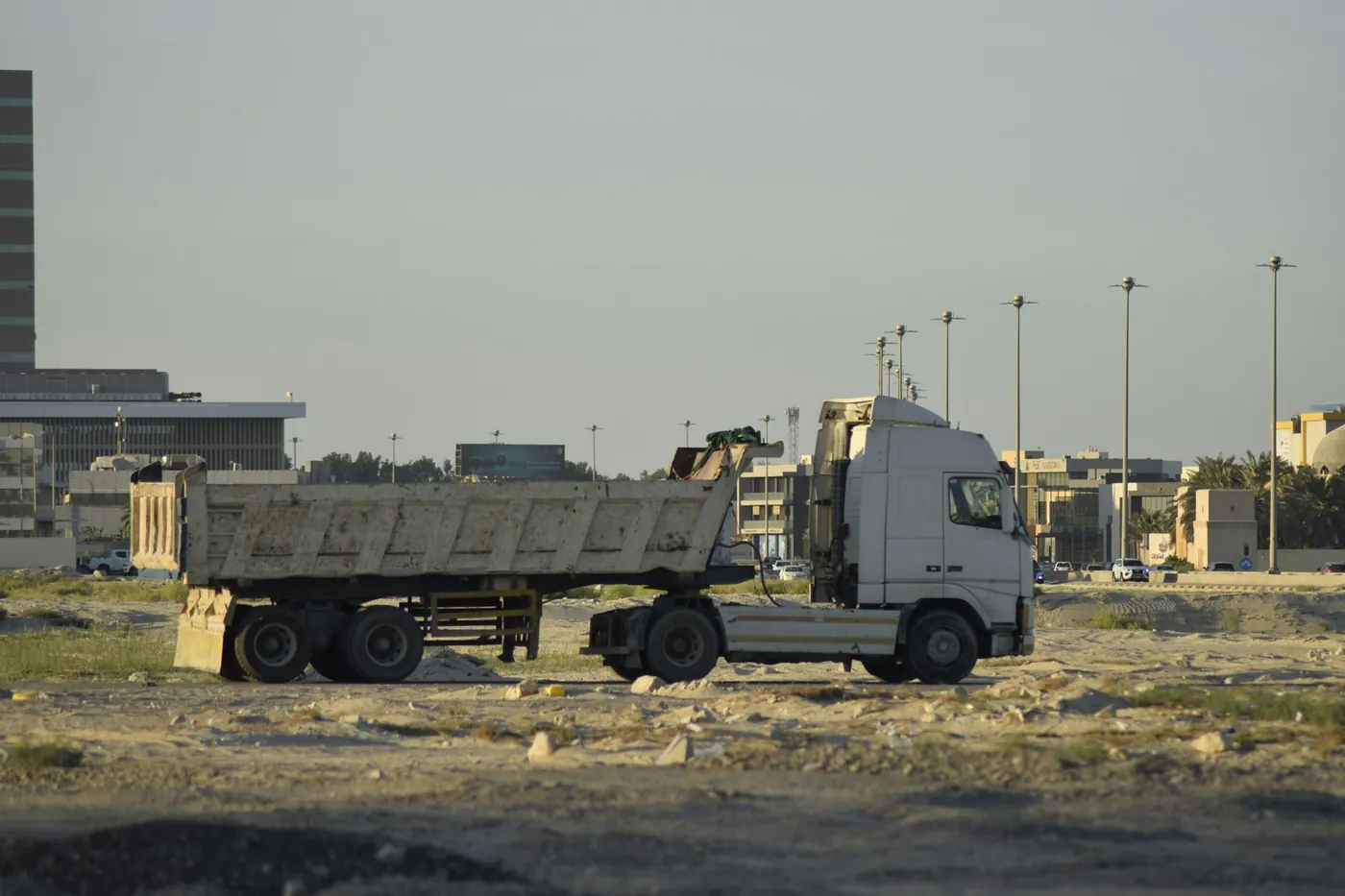
Truck with a tipper body parked on a site.
Demonstration on generic geometry: stress at the crossbeam welded to the side-member web of a tipper and hot-spot stress extrapolation to IIW.
04

Industrial rotary drums

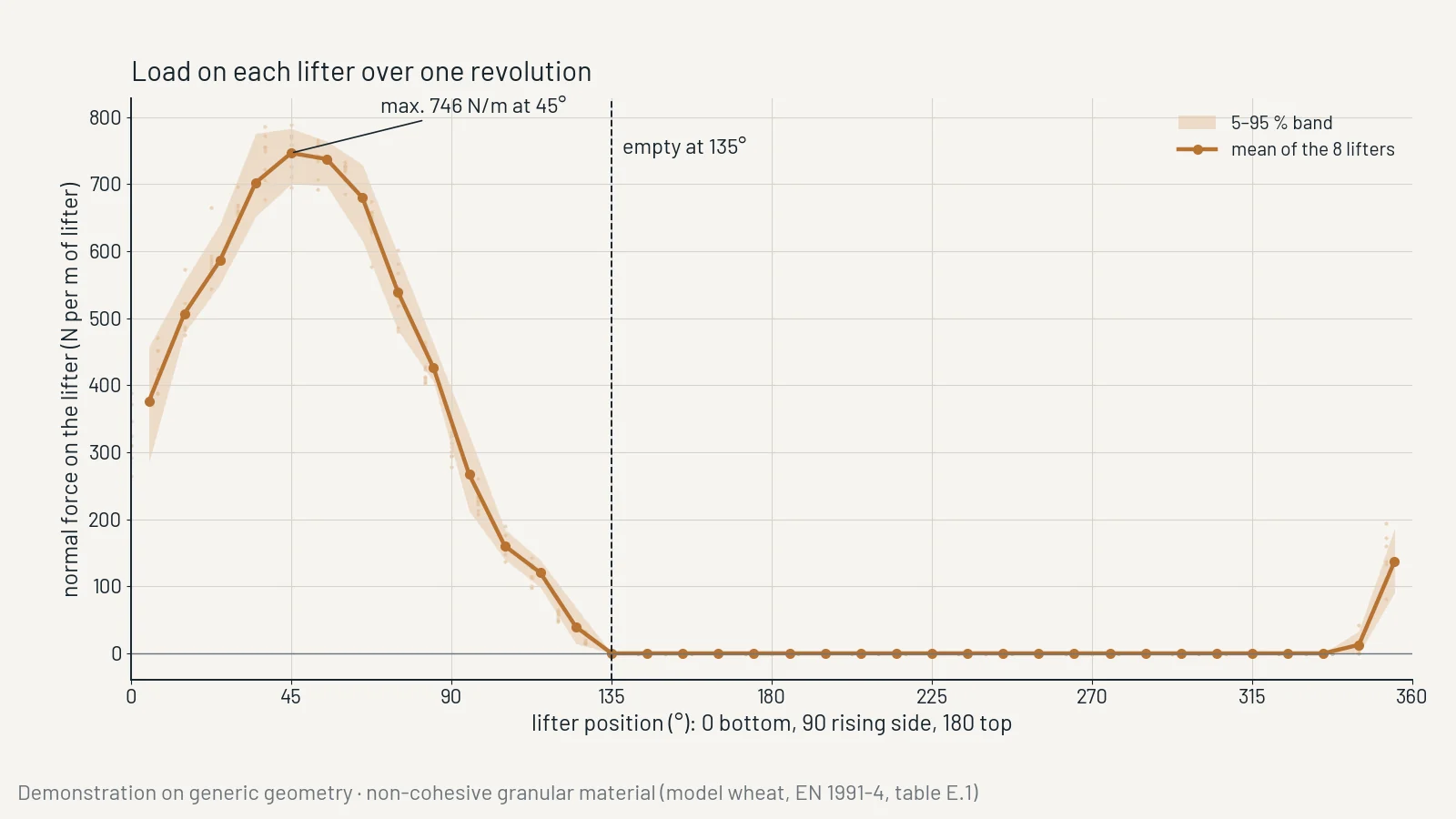
Dryers and asphalt plants: material motion, load on lifters and flights, weld fatigue and shell wear.

Engines
DEM . Finite elements . Wear
Standards
EN 1993-1-9 . IIW
See analysis for Industrial rotary drums
DEM demonstration on generic geometry: load on each lifter of a rotary drum over one revolution; mean of the 8 lifters with its 5 to 95 % band.
05

Wear plates

Which abrasion-resistant steel and thickness to choose, how long each option lasts and when to replace the plate.

Engines
Wear
Data sources
Published abrasion tests
See analysis for Wear plates
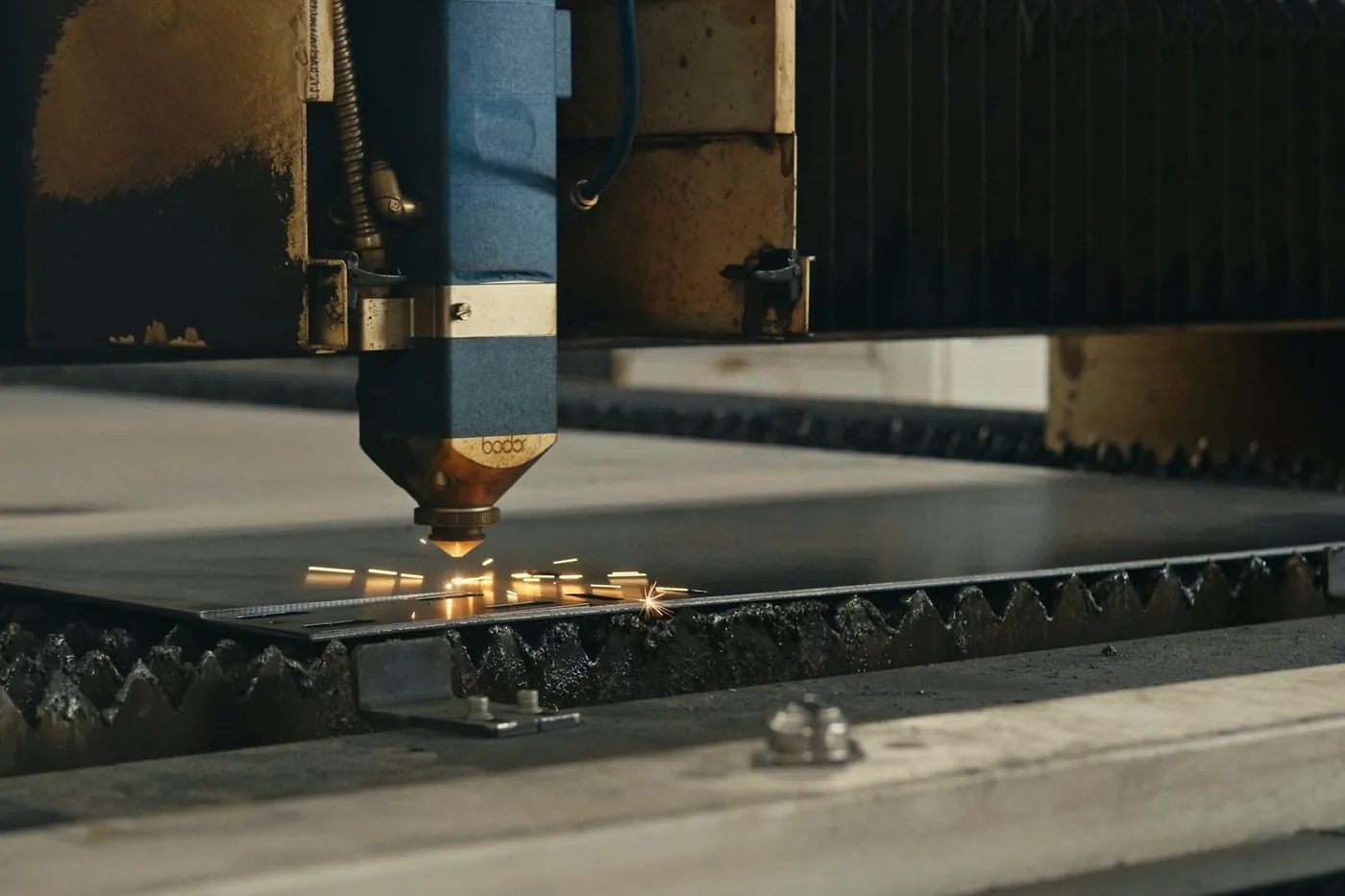
Steel plate being cut on a cutting table, with sparks.
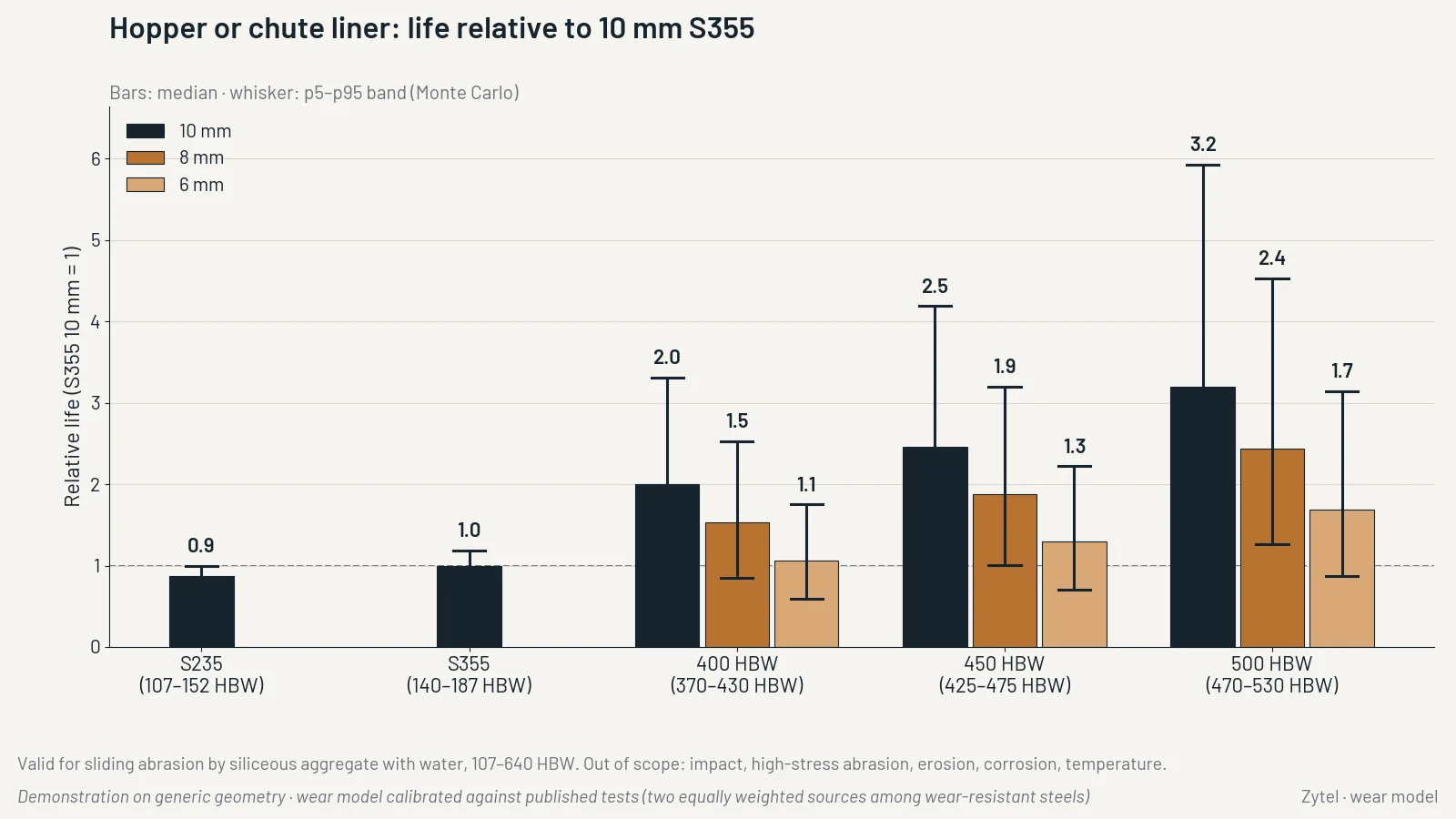
Demonstration on generic geometry: life of a hopper or chute plate relative to 10 mm S355, by steel and thickness, under sliding aggregate abrasion.
Case

Truck mixers: analysis developed for Baryserv

For Baryserv Equipos y Servicios S.L. (Zaragoza, Spain) we have applied the three engines to the truck-mixer drum. The results and the workshop tool are in its private area, with restricted access. Truck-mixer analysis is exclusive to Baryserv.

Baryserv private area
Baryserv
  1. Calibrated concrete

    The particle model reproduces the published slump test of the concrete, without adjusting the measured wall friction.

  2. Drum in DEM

    Concrete motion inside the drum and the force on each blade, revolution by revolution.

  3. Blade fatigue

    Blade and blade-to-shell weld variants analysed with finite elements and checked for fatigue to IIW and EN 1993-1-9.

  4. Plate wear

    Drum life as a function of steel hardness and thickness, with the uncertainty of each comparison.

  5. Workshop tool

    In Baryserv's private area: steel and thickness comparison and a log of thicknesses measured in the workshop, in use.

Pilot case

One engine or a complete part: you choose the scope

The pilot case ends with a signed report, with professional endorsement when you ask for it, and a delivery meeting.

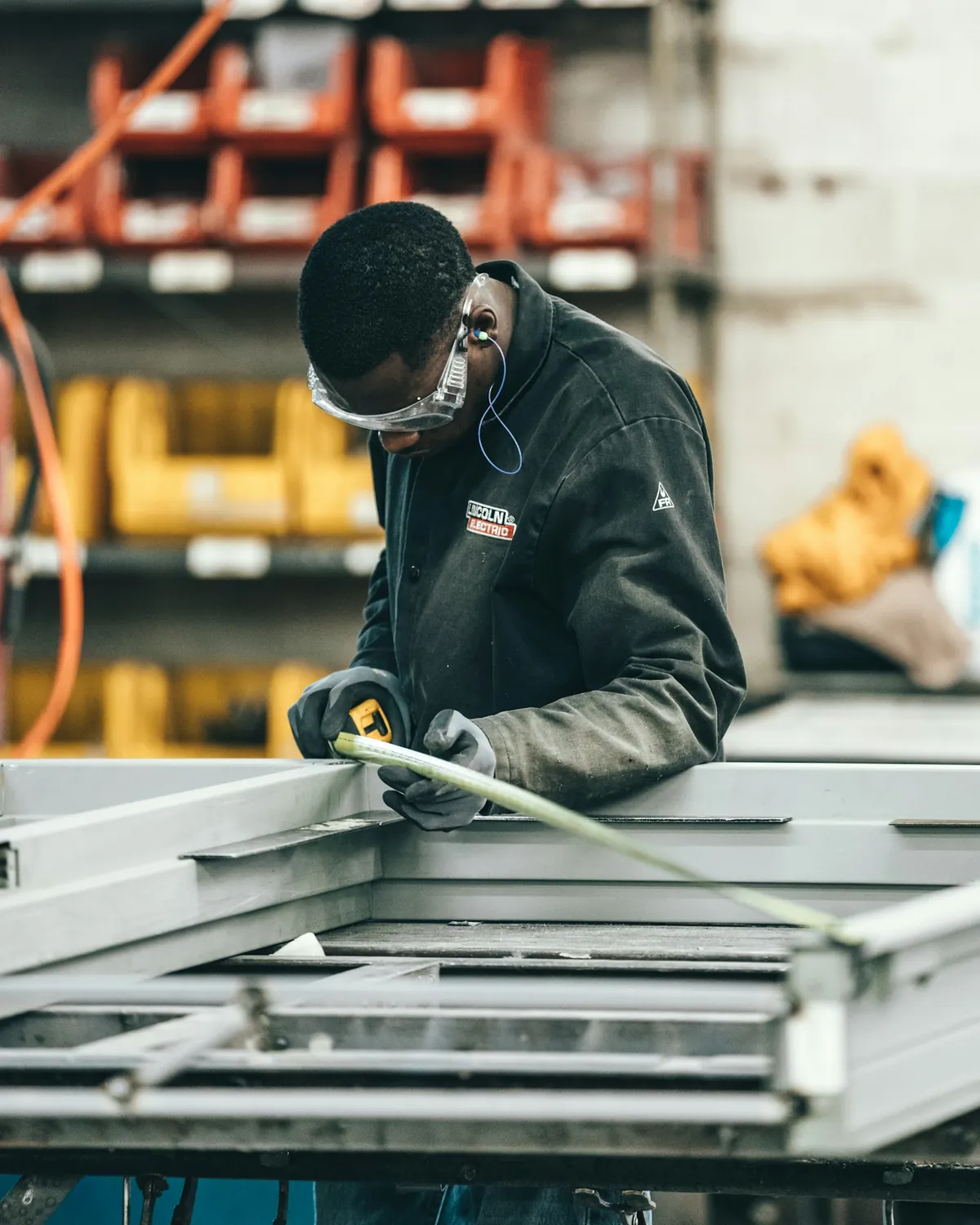
Worker measuring a steel frame in a workshop.
a

One engine, one part

One analysis engine (DEM, finite elements or wear) applied to your part: load, stress or plate life.

b

Complete part or joint

Your part with the engines it needs: material load, stress and fatigue at each weld, and plate life.

What you receive
  • Zytel technical report in PDF
  • Analysis assumptions, geometry and mesh
  • Loads and stress and fatigue results
  • Fatigue at each weld where applicable
  • Conclusions and recommended thicknesses
  • Professional-body endorsement (visado) on request
  • Delivery meeting
What to send us
  • Drawings in DXF/STEP or PDF
  • Current steel grade and thicknesses
  • Material the part holds or moves
  • Duty cycle: cycles, rate, operating conditions

How to engage

  1. Send us the part

    A drawing or description of the part, its material and how it works.

  2. Written proposal

    We send you the scope and timeline in writing, before we start.

  3. Analysis

    We carry out the analysis with the engines agreed in the scope.

  4. Signed report and meeting

    We deliver the report in PDF and explain it in a meeting.

Scope and timeline are set in writing in the proposal, before work begins.

Frequently asked questions

Frequently asked questions

  • What data do you need from us to get started?

    Drawings in DXF, STEP or PDF, current steel grade and thicknesses, the material the part holds or moves, and the usual duty cycle. That is enough to prepare a proposal.

  • What happens to the confidentiality of our drawings?

    Drawings are used solely for this assignment and are not shared with third parties. We can sign a non-disclosure agreement before you send anything.

  • Does Zytel's analysis replace our design office?

    No. We are an external analysis service. Your design office remains responsible for the design; we calculate and sign the result of a specific analysis.

  • Does the report count for CE marking?

    We calculate to IIW, EN 1993-1-9, EN 1991-4 and EN 14015. The report provides the calculation your technical file needs. Certification is issued by your certification body; we support your certification.

  • What if our part does not fit any of the five applications?

    Write to us and we will tell you. If the part is welded steel with a load to calculate or a fatigue life to check, we can most likely help.

  • Do you provide professional-body endorsement (visado)?

    Yes. Professional-body endorsement (visado) is arranged when you ask for it.

  • What happens if the analysis shows the current part does not hold?

    We say so in the report, with the supporting data. If you ask, we also calculate alternative geometries or steel grades that do comply.

  • Do you work with manufacturers outside Spain?

    Yes. Reports can be delivered in English, for clients who export and must submit the calculation to their buyer.

Three in-house engines

Material, load, steel and time: three engines, each one checked

  1. MaterialCalibration test
  2. LoadDEM: material forces on walls and blades
  3. SteelFinite elements: stress and weld fatigue
  4. TimeWear: millimetres lost and plate replacement

DEM

Discrete element method: particle simulation

What it calculates

How a bulk material or a fresh mix moves and what forces it leaves on walls, hoppers and blades.

How it has been checked

Calibrated against the published slump test (Li et al., 2021): slump 216 mm against 201 mm and spread 439 mm against 449 mm.

Finite elements

Meshing and finite element structural analysis

What it calculates

Plate and weld stress and hot-spot fatigue to IIW and EN 1993-1-9; sensitivity to each input.

How it has been checked

Against the exact solution of a cantilever plate, error below 0.3 % with the fine mesh.

Wear

Plate life model

What it calculates

Thickness loss by abrasion as a function of steel hardness; plate life and when to replace it; steel comparison.

How it has been checked

Fitted to the steelmaker's published chart of wear-resistant grades with R2 0.9976 (a thesis on its drum gives a lower slope); on a steel left out of the fit, the median deviates by 4.8 %.

Today each engine is checked on its own. Feeding the DEM load directly into the fatigue analysis is under development.

Standards

The standards we work with

We calculate to

  • IIWRecommendations for fatigue design of welded joints (Hobbacher, 2016)
  • EN 1993-1-9Eurocode 3: fatigue of steel structures
  • EN 1991-4Eurocode 1: actions on silos and tanks
  • EN 14015 / API 650Welded atmospheric storage tanks
  • EN 13445Unfired pressure vessels

We support your certification

  • EN 1090-1 / EN 1090-2CE marking of structural steel components
  • EN 15085Welding of railway vehicles and components
  • ISO 3834Quality requirements for fusion welding

The fatigue analysis goes into your technical quality file. Certification is issued by your certification body.

Zytel

Electric-vehicle engineering since 2007, in Zaragoza

Zytel is a Spanish engineering company founded in 2007 within the Zytech Group, together with the University of Zaragoza. Since then it has engineered electric vehicles: powertrain, batteries, BMS and European and Spanish homologation.

With the University of Zaragoza it developed the Gorila EV, its first electric car, included in the Spanish Ministry of Industry's MOVELE plan, and later the Zylog, one of the first electric cargo vehicles of its kind in Spain. It builds prototypes and runs tests at its plant in La Muela (Zaragoza).

The component analysis offered here applies to your part the same engineering Zytel uses to design its vehicles.

“It will race with its Gorila vehicle, of its own design and manufacture.”

Heraldo de Aragón, 21 February 2010 (translated), on Zytel's entry in the Zero Race, the round-the-world electric car race.
Discover Zytel at zytel.es
  • 2007Founded in Zaragoza, with the University of Zaragoza
  • Gorila EVZytel's first electric car, in the MOVELE plan
  • Zero RaceIn 2010 the Gorila is announced for the round-the-world electric car race
  • ZylogElectric delivery utility vehicle
  • La MuelaPrototyping and test plant
  • 9 countriesWith operations
Black off-road vehicle branded Zytel and Electric Vehicle, converted to electric, in a car park.
Off-road vehicle converted to 100 % electric by Zytel.
Front of the Zytel plant in La Muela, with vehicles parked outside.
Zytel prototyping and test plant in La Muela (Zaragoza).
Research

Methods submitted for peer review

Zytel submits its calculation models for external review and works with AIXC Research on artificial intelligence applied to materials science.

AIXC Research, a Zytech Group company

Zytel is part of the Zytech Group, together with companies in energy storage, solar energy, digital innovation and artificial intelligence research. AIXC Research is the group company that researches artificial intelligence applied to science, including materials science.

aixcresearch.com
David Scott LewisCofounder and Chief Executive Officer (CEO) of AIXC Research

Nearly five decades in technology and innovation; AI researcher since the 1990s. Former EVP at Meta, with senior leadership roles at Microsoft, Samsung and Oracle.

Zytel engineering, under review

  • Wear (Elsevier)The plate life model by hardness and thickness will be submitted to this peer-reviewed journal on wear of materials.
  • Fatigue Design 2027Two abstracts on the fatigue of a blade welded to a shell, on generic geometry, submitted to the Senlis edition (France, November 2027); full paper planned in Procedia Structural Integrity.

Submitting a paper for review does not guarantee acceptance.

Pilot case

Propose a part for a pilot case

Send us the drawing or a description of the part, its material and how it works. We will tell you what we can calculate, with which data and in what time frame. The pilot case ends with a signed report.

Write to ingenieria@zytel.es

Phone: 976 14 18 19